Building strength does not always require a gym membership, expensive machines, or heavy weights.
In fact, bodyweight exercises can be incredibly effective for improving muscle tone, endurance, and overall fitness.
The key is learning how to use your own body as resistance and developing a routine that targets all major muscle groups. Strength training without equipment is accessible, flexible, and can be adapted to fit into even the busiest schedules. With creativity and consistency, these exercises can help you build functional strength and maintain a healthy, active lifestyle.
One of the simplest and most effective ways to start is with push-ups. Push-ups primarily target the chest, shoulders, and triceps, but they also engage the core and stabilizing muscles. They can be modified to suit different fitness levels, from wall push-ups for beginners to knee or standard push-ups for those seeking a greater challenge. By adjusting the speed, number of repetitions, or hand positioning, push-ups can provide a versatile and scalable strength-building option without any equipment.
Squats are another excellent bodyweight exercise that works the lower body, including the quadriceps, hamstrings, glutes, and calves. Squats improve not only strength but also balance and mobility, making them highly functional for daily movement. For added variety, you can experiment with different squat variations such as sumo squats, pulse squats, or single-leg squats. These variations keep workouts interesting and challenge your muscles in new ways, all without needing any additional tools or equipment.
Planks are a cornerstone of bodyweight strength training and are particularly effective for the core. They engage the abdominal muscles, lower back, and shoulders, promoting stability and improving posture. Planks can be adapted by changing the duration, incorporating side planks, or adding movements such as shoulder taps or leg lifts. Regular practice enhances core strength, which supports almost every other movement and helps prevent injuries in daily activities.
Lunges are a versatile lower-body exercise that targets multiple muscle groups while improving balance and coordination. Forward, backward, and lateral lunges challenge the legs and glutes differently, and they can be combined into a sequence for a comprehensive workout. Lunges can also be performed dynamically, with continuous motion or pulses, to increase intensity. The beauty of lunges lies in their simplicity and effectiveness, making them an ideal addition to a no-equipment strength routine.
Glute bridges focus on the posterior chain, particularly the glutes, hamstrings, and lower back. They are simple to perform but highly effective for strengthening the hips and improving hip mobility. Glute bridges can be modified by adding pulses, single-leg variations, or elevating the feet on a stable surface to increase difficulty. Including glute bridges in your routine supports overall lower-body strength and can help alleviate discomfort from prolonged sitting.
Dips can also be performed without traditional equipment by using sturdy surfaces such as a countertop, chair, or low table. Triceps dips primarily target the back of the arms while engaging the shoulders and chest. By adjusting the angle of the body or the placement of the feet, dips can be made easier or more challenging. This makes them a flexible option for building upper-body strength at home or in a small space.
In addition to traditional exercises, combining movements into circuits or sequences can maximize efficiency and intensity. For instance, a routine that includes squats, lunges, push-ups, planks, and glute bridges performed back-to-back with minimal rest creates a full-body workout in a short amount of time. Circuit-style training also increases cardiovascular engagement while building strength, making it an effective approach for those looking to save time while still challenging their body.
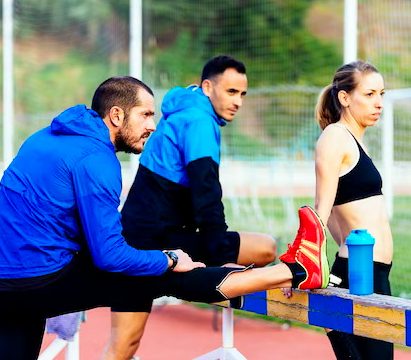
Stretching and mobility exercises complement bodyweight strength routines by enhancing flexibility and reducing the risk of injury. Dynamic stretches before a workout prepare muscles and joints for movement, while static stretches afterward aid recovery and maintain mobility. Incorporating mobility work, such as hip openers, shoulder circles, or ankle rotations, ensures that strength exercises are performed safely and effectively, promoting long-term functional fitness.
Consistency and progression are key to building strength without equipment. Even simple exercises can lead to significant improvements when performed regularly and with attention to form. Progression can be achieved by increasing repetitions, holding positions longer, or modifying exercises to add challenge. Tracking progress over time, whether by the number of repetitions or the duration of holds, provides motivation and a tangible sense of achievement.
Bodyweight strength training also offers flexibility in location and timing. Exercises can be performed at home, in a park, or even during travel, requiring minimal space. This accessibility eliminates common barriers to exercise such as commuting to a gym or needing specialized equipment. Short, focused sessions of twenty to thirty minutes can be sufficient to maintain strength, making it easier to integrate exercise into a busy schedule.
Mindfulness during exercises enhances the effectiveness of a no-equipment strength routine. Paying attention to posture, muscle engagement, and breathing ensures that movements are performed safely and efficiently. This awareness also deepens the mind-body connection, increasing focus and reinforcing the habit of intentional movement. Mindfulness encourages quality over quantity, helping you achieve better results without unnecessary strain or injury.
Finally, self-compassion and patience are essential when building strength without equipment. Progress may be gradual, and some days may be more challenging than others. Embracing a positive mindset and acknowledging small improvements fosters long-term consistency. Bodyweight exercises allow you to adjust intensity and pace according to your energy and ability, making strength training both achievable and sustainable.
Ultimately, strength ideas that require no equipment are an accessible and practical way to maintain a healthy, active lifestyle. Push-ups, squats, lunges, planks, glute bridges, and dips provide a full-body workout that can be modified to match fitness levels and goals. Circuit-style routines, stretching, and mindful practice enhance the effectiveness of these exercises, while consistency and progression support long-term results. By embracing these no-equipment options, anyone can build functional strength, improve mobility, and enjoy the benefits of a strong, healthy body without needing a gym or specialized tools.