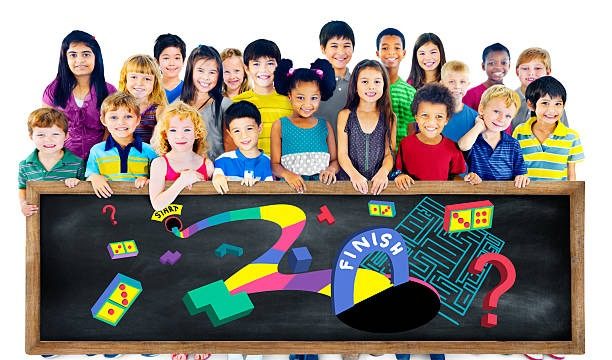
In recent years, the concept of gamification has emerged as a transformative force in the realm of education.
This innovative approach intertwines game design elements with learning processes, creating an engaging environment that encourages exploration and growth.
As we delve into the ways gamification changes how we learn, it’s essential to recognize its potential to make education not only more effective but also more enjoyable.
A gentle invitation to play
At its core, gamification invites learners to step into a world where education feels less like a chore and more like a playful adventure. By incorporating game mechanics such as points, badges, and challenges, educational experiences can shift away from traditional rote memorization. Instead of simply absorbing information, learners find themselves immersed in interactive scenarios that make knowledge acquisition feel organic and fun.
Imagine a classroom where students earn points for collaboration and creativity, or an online course that rewards progress with badges. This playful approach fosters a sense of accomplishment and encourages learners to take risks, explore new ideas, and engage with the material in a dynamic way. When learning feels like a game, it can spark curiosity and inspire a love for knowledge that lasts a lifetime.
Creating a sense of community
One of the most beautiful aspects of gamification is its ability to cultivate a sense of community among learners. In traditional educational settings, students often find themselves isolated in their individual quests for knowledge. With gamification, however, the emphasis shifts toward teamwork and collaboration. Learners can work together to solve problems, share ideas, and celebrate each other’s successes.
This communal aspect of gamified learning creates a supportive environment where individuals feel valued and connected. The shared experience of overcoming challenges together fosters relationships that can enhance motivation and deepen understanding. As learners support one another, they not only gain knowledge but also build important social and emotional skills that are vital for personal and professional success.
Engaging different learning styles
Every learner is unique, and gamification embraces this diversity by catering to various learning styles. Visual learners may thrive in environments where interactive graphics and animations bring concepts to life, while kinesthetic learners may benefit from hands-on challenges that require movement and experimentation. By offering a range of activities and experiences, gamified learning can engage a broader audience and ensure that everyone has the opportunity to shine.
This inclusivity is especially important in today’s diverse classrooms and online learning platforms. By recognizing and honoring individual differences, gamification can empower learners to take ownership of their educational journeys. When students feel seen and understood, they are more likely to invest in their learning and pursue their passions with enthusiasm.
Fostering intrinsic motivation
Intrinsic motivation is the driving force behind a genuine love for learning. Gamification taps into this powerful motivator by making the learning process rewarding in itself. Rather than relying solely on external incentives like grades or praise, gamified environments encourage learners to find joy in the process of discovery and mastery.
When learners engage in activities that challenge them while still being enjoyable, they develop a sense of agency and autonomy. This feeling of control can lead to increased persistence and resilience, as students are more likely to tackle difficult tasks when they are motivated from within. As they face challenges and achieve goals, they cultivate a growth mindset that enhances their overall learning experience.
A pathway to real-world skills
In addition to making learning enjoyable, gamification also equips students with essential real-world skills. Many gamified experiences place learners in scenarios that mirror real-life situations, allowing them to practice problem-solving, critical thinking, and decision-making in a safe environment. This experiential learning approach prepares individuals for the complexities of the modern world, where adaptability and creativity are paramount.
Furthermore, gamification often encourages learners to embrace failure as part of the learning process. In a game, losing a level or failing to complete a challenge can be viewed as an opportunity for growth rather than a setback. This mindset shift can help learners develop resilience and a willingness to take calculated risks, both of which are invaluable in personal and professional contexts.
Bridging the gap between theory and practice
For many students, traditional educational approaches can feel disconnected from real-world applications. Gamification bridges this gap by integrating theoretical knowledge with practical application. Through simulations, role-playing, and scenario-based challenges, learners can see how concepts apply in real-life situations, making the material more relevant and engaging.
This connection between theory and practice not only enhances understanding but also fosters a deeper appreciation for the subject matter. When learners can visualize how what they are studying relates to the world around them, they are more likely to retain information and apply it in meaningful ways.
Embracing a lifelong learning mindset
As the landscape of education continues to evolve, gamification serves as a powerful reminder of the importance of lifelong learning. By instilling a love for exploration and curiosity, gamified experiences encourage individuals to remain open to new ideas and experiences throughout their lives. This mindset can lead to continual personal and professional growth, allowing learners to adapt to changing circumstances and pursue new passions.
In a world that often prioritizes speed and efficiency, gamification invites us to slow down and savor the learning journey. It teaches us that growth is not always linear and that the process of discovery can be just as valuable as the end result.
In conclusion, gamification is reshaping the landscape of education by infusing it with playfulness, community, and relevance. As we embrace this approach, we are not only enhancing learning experiences but also nurturing a generation of curious, resilient, and motivated individuals. By making education enjoyable and meaningful, gamification paves the way for a brighter, more engaged future. Whether in a classroom, a workplace, or at home, the lessons learned through play can inspire us all to keep learning and growing, one game at a time.